
To attract Gen Z, you must stop focusing on which channels to use and start obsessing over eliminating every micro-second of friction from their experience.
- Digital convenience is not a feature for this generation; it’s a baseline expectation, and any friction is seen as a fundamental business flaw.
- Trust is built through peer reviews and seamless, gamified experiences, not just traditional advertising or influencer posts.
Recommendation: Audit a single customer journey on your site this week—from landing page to checkout—and identify three points of friction you can eliminate immediately.
If you’re a traditional business owner, you’ve likely noticed a worrying trend: younger customers, particularly Gen Z, seem to be slipping through your fingers, flocking to sleeker, tech-enabled competitors. The common advice is to “get on TikTok” or “hire an influencer.” While these channels have their place, they are merely symptoms of a much deeper shift. You’re not losing because you’re not on the right platform; you’re losing because your customer experience is costing Gen Z something they value more than money: their time and attention.
The core misunderstanding is that Gen Z is simply “impatient.” In reality, they’ve grown up with systems so fluid and intuitive that they perceive any friction—an extra form field, a slow-loading page, a confusing return policy—not as an inconvenience, but as a sign of disrespect. This is the new battleground. The key isn’t to simply add more digital layers to your business, but to fundamentally re-engineer your processes around a principle of absolute, radical convenience. It’s about shifting from a seller’s mindset to a user’s mindset, where every click and every second counts.
This guide will deconstruct the “utility mindset” of Gen Z. We will move beyond the superficial advice and provide a strategic framework for identifying and eliminating the “friction tax” that is driving your future customers away. We’ll explore how to design experiences so effortless they become invisible, turning casual browsers into loyal advocates.
For those who appreciate timeless classics and user experiences that truly make a mark, the following video offers a unique perspective on engagement. It’s a memorable illustration of what can capture and hold attention in a lasting way.
This article provides a detailed roadmap to adapt your business model. Below is a summary of the key areas we will cover, from redesigning your checkout process to building a community that actively reduces churn.
Summary: Mastering Digital Convenience to Win Over Gen Z
- Why 60% of Customers Abandon Orders if Checkout Takes 2 Minutes?
- How to Design a Loyalty App That Customers Actually Use?
- Influencer or Customer Reviews: Which Drives More Sales for Local Biz?
- The Shipping Speed Mistake That Kills Customer Retention
- How to Automate Customer Service Without Sounding Like a Robot?
- The “Above the Fold” Error: Why Your Traffic Isn’t Calling You?
- Upselling by Habit: Offering the Right Product at the Right Time
- How to Build a Customer Community That Reduces Churn?
Why 60% of Customers Abandon Orders if Checkout Takes 2 Minutes?
The two-minute checkout isn’t just a benchmark; it’s a psychological cliff. For a generation accustomed to one-click purchases, any delay triggers an immediate cost-benefit analysis. Every extra form field, every unexpected question, is a “friction tax” you levy on their attention. The core issue isn’t laziness; it’s a violation of their utility mindset. They see your website as a tool to get a job done. If the tool is clunky, they’ll find a better one. Research confirms this behavior with a global shopping cart abandonment rate of 70.19%. Forcing a user to create an account is one of the biggest offenders, responsible for over a quarter of abandoned carts.
The goal is to make the path to purchase invisible. Baymard Institute’s research shows that the average checkout flow has too many form elements and that optimizing this process can dramatically increase conversions. Think of it this way: for every piece of information you ask for, you must provide immediate, tangible value. Is their zip code necessary for a digital download? Does their phone number need to be mandatory? Each question must earn its place or be cut.
To start, focus on these critical optimizations:
- Offer Guest Checkout: Do not force account creation. This single change can recover a significant portion of lost sales.
- Optimize for Mobile First: With abandonment rates peaking on mobile devices, ensure your checkout is designed for thumbs, not mouse clicks. Buttons should be large and form fields should automatically bring up the correct keyboard (numeric for phone numbers, etc.).
- Use Progress Indicators: Visibly show the user where they are in the process (e.g., “Step 1 of 3”). This manages expectations and reduces the anxiety of a seemingly endless checkout.
- Send Timely Abandonment Emails: An automated email sent within the first hour can be highly effective, serving as a helpful reminder rather than a desperate plea.
Ultimately, a frictionless checkout signals respect for the customer’s time. It’s the first and most crucial promise of digital convenience you can make, and keeping it is non-negotiable for winning over Gen Z.
How to Design a Loyalty App That Customers Actually Use?
The old “buy nine, get the tenth free” punch card is dead. For Gen Z, a loyalty app isn’t a wallet-filler; it’s a digital experience that must compete for their attention against games, social media, and entertainment. If it feels like a chore, it will be deleted. The key to creating an app that customers actually use is to stop thinking about “loyalty” and start thinking about engagement and entertainment. The most successful modern loyalty programs are disguised as games.
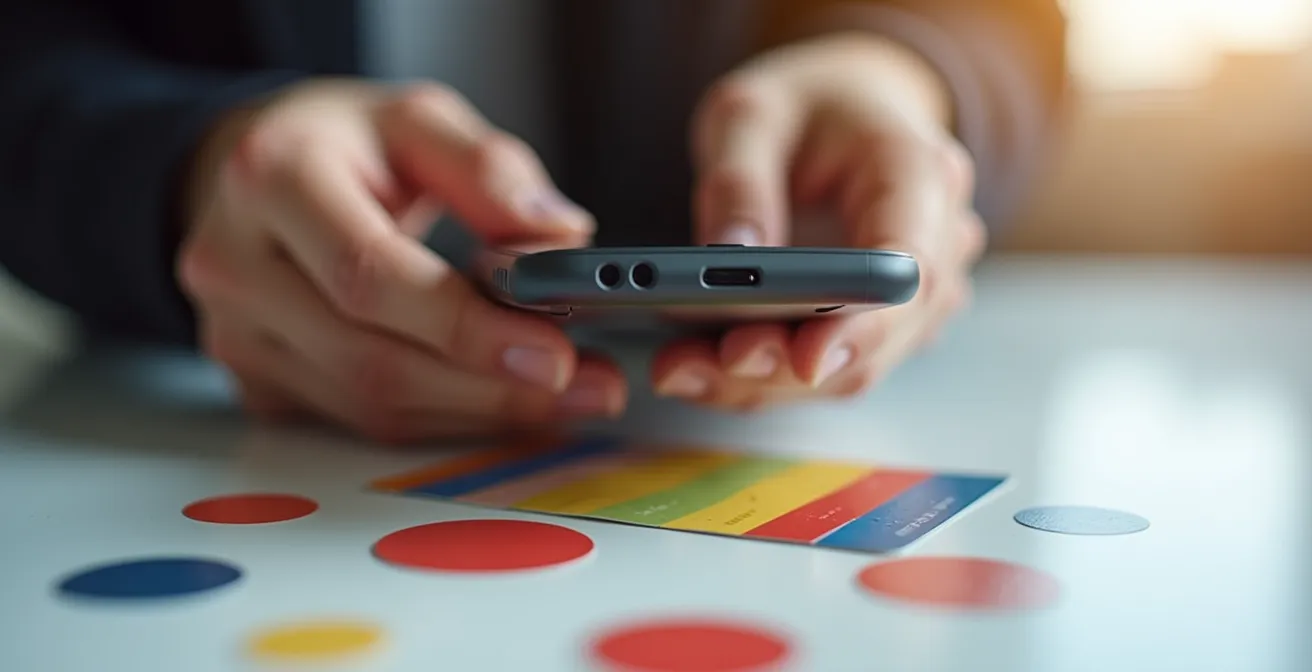
Gamification is the strategic integration of game-like elements—points, badges, leaderboards, and challenges—into non-game contexts. It works because it taps into fundamental human desires for achievement, competition, and reward. Brands that incorporate gamification into their loyalty strategies see a significant rise in user engagement, with some studies showing an increase of up to 47%. Instead of just tracking purchases, you create a system where customers are on a quest.
Case Study: Sephora’s Beauty Insider Gamified Challenges
Sephora masterfully evolved its Beauty Insider program by adding gamified challenges. In 2023, they began asking members to complete specific tasks like trying a mobile checkout, signing up for SMS alerts, or booking an in-store service. Each completed task earns points, with a bonus for finishing the entire “quest.” This approach is brilliant for two reasons: it transforms routine shopping into an engaging activity and it strategically introduces customers to new, high-value services and channels they might not have tried otherwise.
To build a loyalty app that sticks, you must make it more rewarding to use than not to use. It should offer exclusive access, personalized challenges, and a sense of progress that makes every interaction with your brand feel like a small win.
Influencer or Customer Reviews: Which Drives More Sales for Local Biz?
In the quest to attract Gen Z, many businesses pour their budgets into influencer marketing, hoping a stylish post will translate into sales. While influencers can generate awareness, they are operating in an ecosystem where authenticity is the ultimate currency. For Gen Z, the unfiltered opinion of a peer almost always outweighs the polished recommendation of a paid spokesperson. The data is clear: 92% of consumers trust peer recommendations, while only 56% trust influencers. This gap in trust has a direct impact on the bottom line.
The power of user-generated content (UGC)—authentic reviews, photos, and videos from real customers—cannot be overstated. When a potential customer sees someone like them using and loving your product, it provides a level of social proof that no influencer campaign can replicate. In fact, studies show that product pages featuring UGC see a 79% increase in conversion rates. This is because UGC answers the most critical question in a buyer’s mind: “Is this product for someone like me?”
This doesn’t mean influencer marketing is useless, but its role must be strategic. It’s best used for top-of-funnel awareness and entering new markets. For driving conversions and building long-term trust, nothing beats a robust collection of genuine customer reviews. The following table breaks down the core differences:
| Metric | Influencer Marketing | Customer Reviews/UGC |
|---|---|---|
| Trust Level | 56% trust influencer recommendations | 92% trust peer recommendations |
| Conversion Impact | Immediate visibility boost | 5X higher conversion than branded content |
| Cost Efficiency | Higher upfront costs | Organic/incentive-based |
| Best Use Case | Brand awareness, new markets | Building trust, social proof |
| Content Longevity | Campaign-specific | Evergreen value |
For a local business looking to build a loyal customer base, the mandate is clear: prioritize and incentivize the creation of user-generated content. Make it incredibly easy for customers to leave reviews, share photos, and feel like they are part of your brand’s story. Their authentic voices will be your most powerful sales force.
The Shipping Speed Mistake That Kills Customer Retention
The common wisdom is that Gen Z demands lightning-fast shipping. While speed is important, the most damaging mistake businesses make isn’t slow delivery—it’s the unexpected cost of delivery. A customer can be excited about a product, add it to their cart, and proceed to checkout, only to be hit with a surprise shipping fee that shatters their price perception. This moment of friction feels like a bait-and-switch, and it is the single biggest reason for cart abandonment. According to recent data, a shocking 41% of shoppers abandon carts due to unexpectedly high delivery fees.
Digital convenience in shipping isn’t just about speed; it’s about transparency and control. Gen Z expects to know the total cost upfront, before they invest time in the checkout process. Hiding shipping costs until the final step is a violation of trust that can permanently damage a customer relationship. They would often rather pay more for a product with “free” shipping than less for a product with a separate shipping charge, because the former feels honest and the latter feels deceptive.
To fix this, you must treat your shipping strategy not as a logistical backend function, but as a core part of your customer experience and marketing. A clear, transparent, and flexible shipping policy can become a powerful competitive advantage. Use the following checklist to audit your current approach and identify critical areas for improvement.
Your Action Plan: Audit Your Shipping Strategy
- Points of Contact: List all the places shipping is mentioned (or not mentioned)—product pages, cart, homepage banners, and checkout.
- Collecte: Inventory your current shipping options. Do you offer different speeds? Is there a free option? Are the costs clear?
- Coherence: Does your shipping policy align with your brand’s value proposition? If you’re a premium brand, are you offering premium shipping options?
- Mémorabilité/émotion: Check your communication. Are you using generic courier tracking pages, or are you creating a branded tracking experience? Are your SMS updates proactive and helpful?
- Plan d’intégration: Prioritize the biggest friction point to fix first. This is almost always displaying the shipping cost threshold clearly throughout the entire shopping journey, not just at the end.
Ultimately, stop thinking about shipping as a cost to be hidden and start thinking of it as a service to be sold. Offer options, be transparent, and give the customer control. This shift in perspective is essential for retaining the loyalty of a generation that values honesty as much as speed.
How to Automate Customer Service Without Sounding Like a Robot?
The fear of robotic, unhelpful customer service makes many business owners hesitant to automate. But for Gen Z, the opposite is true: they often *prefer* an efficient automated system to a slow human one for simple tasks. They don’t hate robots; they hate *bad* robots. The key to successful automation is not to replace humans, but to create a seamless integration where AI handles the speed and humans provide the empathy.
Gen Z has grown up interacting with AI as a utility. They ask Siri for the weather and Alexa to play a song. They expect the same efficiency from your business. They want instant answers to common questions like “Where is my order?” or “What is your return policy?” Forcing them to wait in a queue to ask a human a question a chatbot could answer in seconds is a major source of friction. The goal is a system where the AI handles the predictable, and seamlessly hands off the complex issues to a human agent who is already equipped with all the context.

This “AI-Human Handoff” is the gold standard for modern customer service. It respects the customer’s time while ensuring that nuanced or emotional issues receive the human touch they require.
Case Study: The AI-Human Handoff Strategy
Leading direct-to-consumer brands are implementing sophisticated AI workflows. A customer initiates a chat, and the bot instantly identifies them, pulls up their order history, and asks for the nature of the problem. If it’s a simple tracking query, the bot resolves it instantly. If the customer indicates a more complex issue like a damaged product, the bot gathers initial details (e.g., asks for a photo) and then seamlessly transfers the entire conversation, including all context, to a human agent. The agent doesn’t have to ask “What’s your order number?”—they can immediately start with “I’m so sorry to see your item arrived damaged. Let’s get a replacement sent out right away.”
By automating the mundane, you free up your human agents to do what they do best: solve complex problems, build relationships, and provide the empathetic support that turns a frustrated customer into a loyal one. This isn’t about cutting costs; it’s about elevating your service to meet modern expectations.
The “Above the Fold” Error: Why Your Traffic Isn’t Calling You?
For years, marketers have obsessed over placing a prominent Call-to-Action (CTA) “above the fold.” But for a hyper-connected, skeptical generation, this approach is often a critical error. Gen Z users are bombarded with digital noise; the average user performs around 425 digital actions per month. In this environment, a high-commitment CTA like “Buy Now” or “Call Us Today” on a landing page is the equivalent of a stranger asking for your phone number after saying hello. It’s too much, too soon.
The “above the fold” real estate on your mobile site isn’t for asking; it’s for giving. You have approximately three seconds to answer the user’s implicit question: “What’s in it for me, right now?” Instead of demanding an action, you must provide instant value or engagement. Your goal should be to create a “conversation starter,” not a conversion command. This means replacing traditional CTAs with interactive elements that offer immediate, tangible benefits.
Think about it from their perspective. They’ve landed on your page, likely from a quick tap on social media. They don’t know you or trust you yet. Your first interaction must be a low-friction, high-value exchange. Here are some effective strategies:
- Interactive Tools: Instead of “Get a Quote,” offer a “Cost Calculator.” Instead of “Learn More,” provide a “2-Minute Style Quiz.” These tools provide personalized value without demanding personal information upfront.
- Thumb-Stopping Visuals: Use short, captivating video loops or dynamic imagery that tells a story instantly. The visual itself should communicate the core benefit of your product.
- Micro-Interactions: Implement small, delightful animations or feedback loops. When a user taps a button, it should react. This subtle feedback makes the experience feel more responsive and alive.
The modern “above the fold” strategy for Gen Z is one of generous engagement. Give them a reason to stay, a tool to play with, or a question to answer. Earn their attention with value, and the conversion will follow naturally.
Upselling by Habit: Offering the Right Product at the Right Time
Traditional upselling often feels aggressive and transactional—the digital equivalent of “Do you want fries with that?” This approach fails with Gen Z because it interrupts their flow and feels self-serving. To effectively upsell to a generation that prizes effortless experiences, you must shift from opportunistic selling to anticipatory service. The right upsell isn’t an interruption; it’s the next logical step in the customer’s journey, presented at the exact moment of need.
Gen Z wants quick, effortless experiences. Brands that provide those have the best chance to win them over, and other generations will follow their lead.
– EMARKETER Analysis Team, Digital convenience drives Gen Z’s spending and wellness choices
This means leveraging data and context to understand user habits and predict their needs. Instead of a generic “You might also like…” pop-up, modern upselling is integrated seamlessly into the user experience. It’s about showing them the perfect accessory on the product page for the item they’re already viewing, or offering a subscription option right after they’ve made their third purchase of the same consumable product. It feels less like a sales pitch and more like a helpful suggestion from a knowledgeable friend.
Case Study: YouTube’s AI-Powered Predictive Upselling
YouTube is a master of contextual commerce. Using AI to tag products appearing in videos, it allows viewers to shop directly from the content they’re watching. When a creator reviews a camera, a “shoppable” link to that camera and compatible lenses can appear at the perfect moment. This is powerful because the “upsell” (the lens) is presented in a context of high intent and trust. Data shows the platform’s huge influence on purchase decisions, with a significant percentage of Gen Z teens seeing ads for items they later requested. This demonstrates a shift towards embedding commerce within the content stream, making it a natural part of the discovery process.
The most successful upselling strategy for Gen Z is one they don’t even recognize as selling. It’s simply the next helpful step, delivered with perfect timing and context, making their journey smoother and more complete.
Key Takeaways
- Friction is the ultimate enemy. Every extra click, field, or second of waiting is a tax on Gen Z’s attention that they are unwilling to pay.
- Authenticity trumps polish. User-generated content and peer reviews build more trust and drive more sales than high-budget influencer campaigns.
- Engagement must be earned through value. Transform loyalty programs into games and front-load your website with interactive tools, not demanding calls to action.
How to Build a Customer Community That Reduces Churn?
For many businesses, “community” means a forgotten forum or a Facebook group spammed with promotions. For Gen Z, a true community is a space of belonging, co-creation, and shared identity. It’s not a marketing channel; it’s a retention engine. A well-built community can drastically reduce churn, with some studies showing that gamified community engagement can lead to a 63% reduction in churn. This is because a community transforms the customer-brand relationship from transactional to relational.
Building a successful community isn’t about creating a platform; it’s about establishing rituals. These are regular, predictable, and engaging activities that give members a reason to come back. A static forum is a ghost town; a community with a weekly “Ask Me Anything” session with the founder is a destination. These rituals create a rhythm and a sense of shared experience that builds powerful emotional bonds.
The goal is to make members feel like insiders, not just customers. They should have access to people, information, and opportunities that the general public doesn’t. This sense of exclusivity is a powerful driver of loyalty. Here are some proven community-building rituals:
- Exclusive Access: Offer community members early access to new product drops or beta features.
- Co-Creation Challenges: Launch design challenges where members can influence the next product line or feature update. This fosters a deep sense of ownership.
- Member-Led Workshops: Empower your most dedicated customers to teach others. A customer-led workshop on how to use your product is far more authentic than a branded tutorial.
- Achievement Systems: Build a system of badges and recognition for community participation, such as “Top Contributor” or “Founding Member.”
Start by identifying one simple ritual you can implement this month. It could be a weekly Q&A or an exclusive content drop. By focusing on creating consistent, valuable interactions, you will begin to build a community that not only retains customers but turns them into your most passionate advocates.